


Achieve the most ideal
facial proportions with meticulous
LaBom Rhinoplasty.

LABOM NOSE 1
1:1 Customized Rhinoplasty from the Bridge to the Tip of the Nose
Nose Surgery by Type
At LaBom Plastic Surgery, Nose Surgery by Type is customized based on the proportions of the eyes,
nose, and mouth, as well as the forehead-nose angle and nasal profile. We create a 1:1 plan to adjust the height and shape to suit each patient's features
Low Nose
A low nose refers to a nose where the distance between the eyebrows is wide, the bridge of the nose appears low and broad, and the tip and nostrils appear flared.
The blunt tip and wide bridge are designed considering the face shape and the nose structure, with the bridge height increased to create a more balanced appearance.

Low Nose Surgery Expertise
Simply increasing the height of the nose bridge can disrupt the harmony with the overall face shape. LaBom's low nose surgery designs the nose with appropriate height and width, considering the overall facial contour and each individual’s anatomical features.
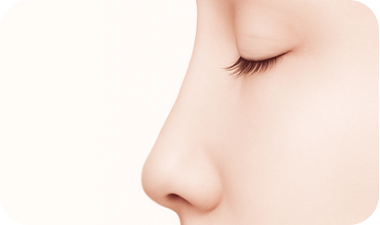
Before Low Nose Surgery

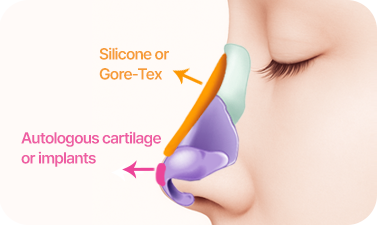
Customized implants such as silicone, Gore-Tex, or autologous cartilage are inserted.
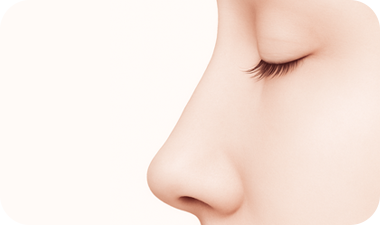
A natural nose line that fits the proportions is created.
Dorsal Hump Nose
A dorsal hump nose refers to a nose where the area in the middle of the nose bridge, where the cartilage and bone connect, protrudes.
The protruding bone and cartilage are precisely predicted and smoothly shaved down and refined to eliminate any bumps.

Dorsal Hump Nose Surgery Expertise
LaBom's dorsal hump nose surgery precisely predicts the protruding bone and cartilage areas, then carefully shaves and refines them. The gap created by the removed cartilage is filled with cartilage grafting, and an osteotomy is performed to narrow the nose bridge and prevent it from looking wide.
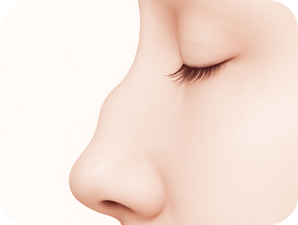
Before Surgery
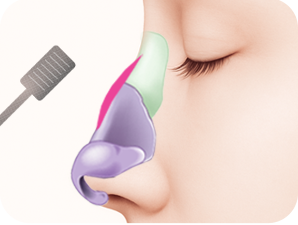
Shaving the protruding dorsal hump or performing an osteotomy of the nasal bone.
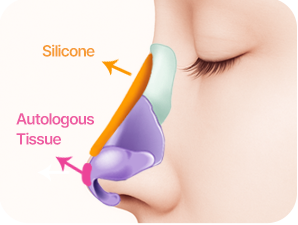
If the nose bridge is low, silicone or autologous tissue implants are inserted.
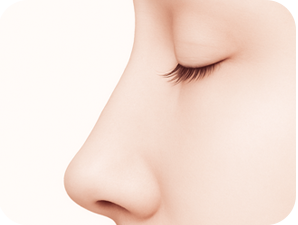
Achieving a Smooth and Refined Nose Bridge
Deviated Nose
A deviated nose refers to a nose where the line from the bridge to the tip follows a C-shaped or S-shaped curve.
Depending on the degree of deviation, the asymmetry of the nose bridge is corrected, and cartilage grafting is performed to improve both functional and aesthetic aspects.

Deviated Nose Surgery Expertise
Over 90% of deviated nose cases involve septal deviation. LaBom's surgery corrects the nose bridge asymmetry, uses cartilage grafting to restore functionality, and performs osteotomy to make the nasal bones symmetrical, with fine adjustments to the nasal tip.
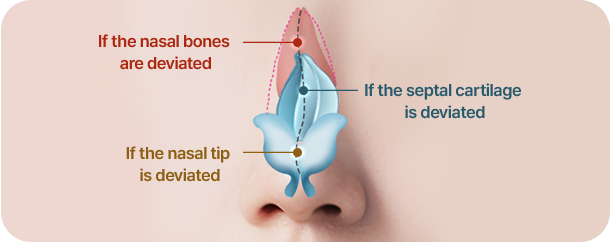
Precise analysis of the underlying cause through detailed examinations.
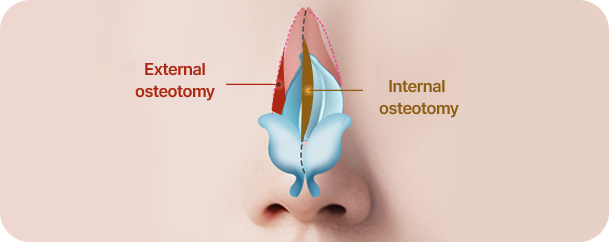
Correction through internal or external osteotomy, depending on the cause.
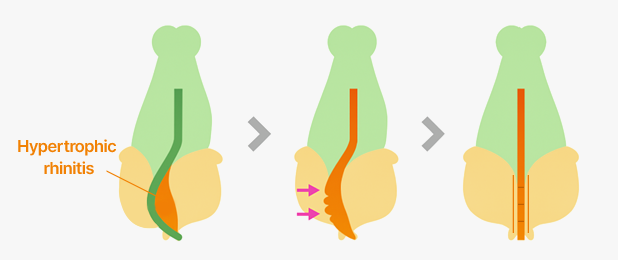
C-shaped septal deviation correction range
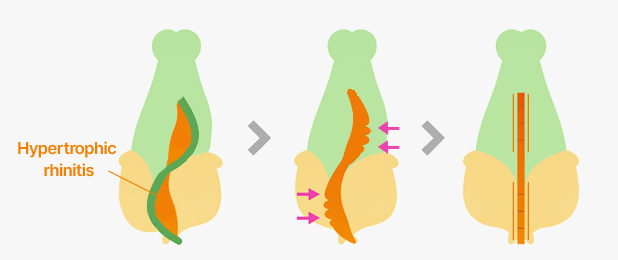
S-shaped septal deviation correction range
Bulbous Nose
A bulbous nose refers to a nose where the tip and nostrils appear excessively blunt and wide compared to the width of the bridge.
Excess fat tissue at the nasal tip is carefully removed, and the cartilage is reshaped to create a sharper and slender nose tip.

Bulbous Nose Surgery Expertise
LaBom's bulbous nose surgery carefully removes excess fat tissue at the tip of the nose.
If the nasal tip cartilage is too large, it may be trimmed slightly or sutured to shape it. To achieve a more defined tip, autologous cartilage is grafted to create a sharper contour.
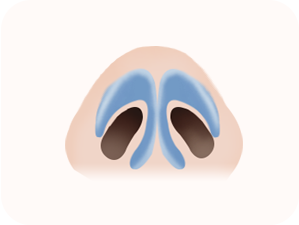
Before Surgery A wide,
bulbous nose tip.
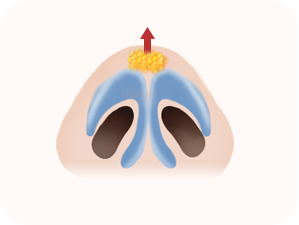
Fat tissue is carefully removed.
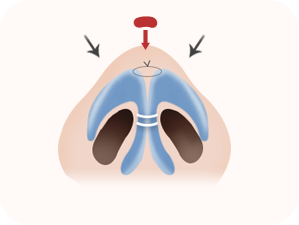
Fat tissue is carefully removed.
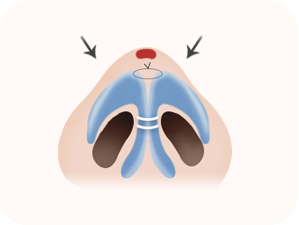
A sharpened and refined nose tip.
Long Nose / Arrow Nose
A long or arrow nose refers to a nose where the tip droops downward or appears elongated, making the overall nose look longer.
The cartilage at the nasal tip is trimmed, and septal extension surgery is performed to move the nasal cartilage upward and secure it, lifting the drooping nose tip.

Long Nose / Arrow Nose Surgery Expertise
LaBom's long nose/arrow nose surgery combines cartilage repositioning and septal surgery to match the facial proportions and correct the length of the nose. After correcting the long or arrow nose, the surgery prevents recurrence and lifts the tip by trimming the nasal tip depressor muscle and grafting autologous cartilage to support the tip.
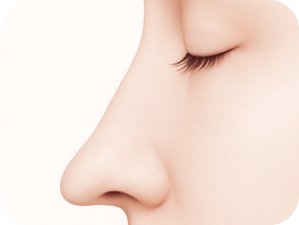
Before Surgery:A downward-drooping long nose.
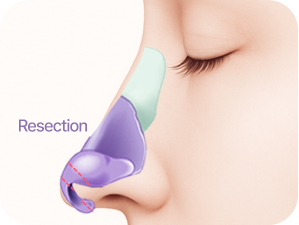
The nasal tip cartilage is trimmed.
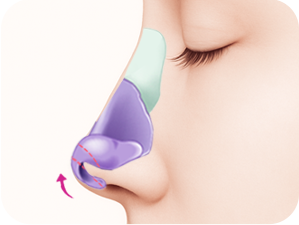
The remaining cartilage is lifted and sutured.
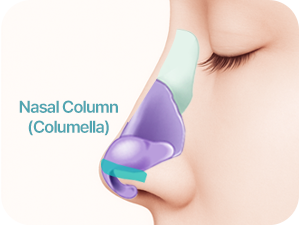
The nasal cartilage is moved upward and secured (septal extension surgery).
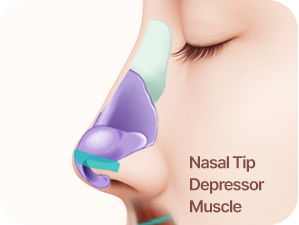
The nasal tip depressor muscle is trimmed to prevent recurrence.
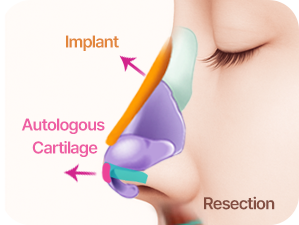
Implants and autologous cartilage may be added if necessary.
Short Nose / Upturned Nose
A short or upturned nose refers to a nose that appears overall short, with the tip raised and the nostrils visible.
By diagnosing the degree of the raised tip, skin thickness, length, and the angle of the nasal profile, the length of the nose is extended, and the tip is lowered.

Short Nose / Upturned Nose Surgery Expertise
LaBom's short/upturned nose surgery adjusts the nose length according to the facial proportions by diagnosing the skin thickness, nostril exposure, and nasal profile angle. It corrects the position of the septum and nasal tip cartilage. A customized cartilage support is used based on the degree of shortening to ensure strong fixation and prevent recurrence.
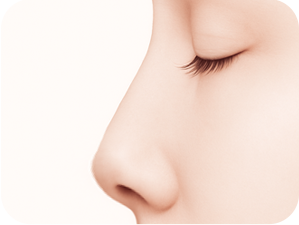
Before Surgery:Raised nose tip exposing the nostrils.
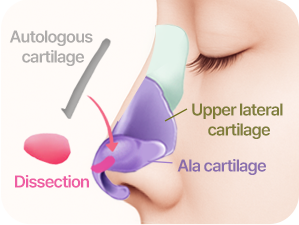
Autologous cartilage insertion.
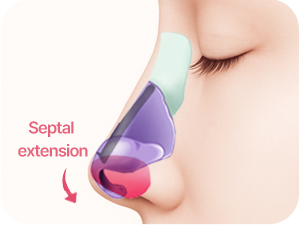
Septal extension to lengthen the nose.
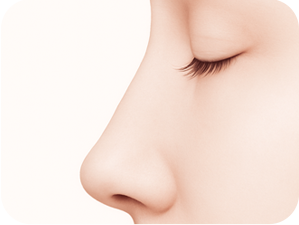
After Surgery Naturally lowered nose tip.
Nose Surgery by Type Information

Surgery Time
1 -2hour

Anesthesia Method
Sleep anesthesia

Hospitalization
Same-day discharge

Suture Removal
After 7 days

Recovery Period
Approximately
1 week
LABOM NOSE 2
Using Only Autologous Tissue for a Seamless Look
Cargel Nose Surgery
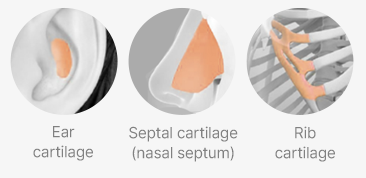
Cargel Nose Surgery involves finely grinding autologous cartilage (such as ear cartilage, septal cartilage, or rib cartilage)
and injecting it into the nose bridge or tip using a syringe.
Patented Cargel Nose Surgery
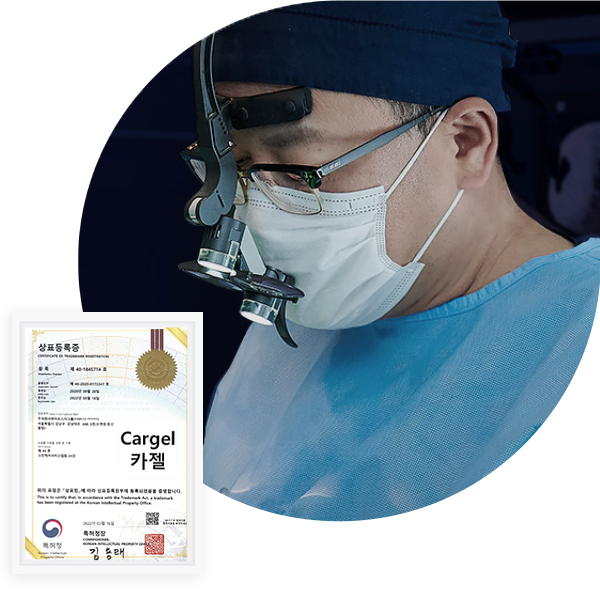
Cargel Nose Surgery is a patented technique developed by LaBom Plastic Surgery, continuously refined to provide higher-level medical technology and enhance individual beauty.
Instead of only injecting autologous cartilage, we also inject fibrin concentrate separated from the patient’s blood. This fibrin concentrate increases the viscosity to prevent the cartilage particles from dispersing and contains growth factors that enhance cartilage survival, improving the success rate of autologous cartilage grafts.
NO Artificial Implants
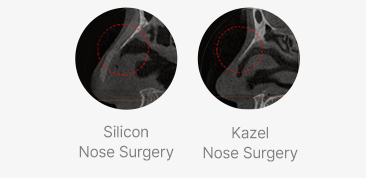
The surgery uses no artificial implants, which do not show on CT scans and have no foreign body sensation. Ideal for those uncomfortable with implants.
Safe Use of Autologous Cartilage
The surgery uses autologous cartilage (septal, ear, or rib cartilage), ensuring safety. *Excludes donated rib cartilage..
Autologous Blood Adhesion
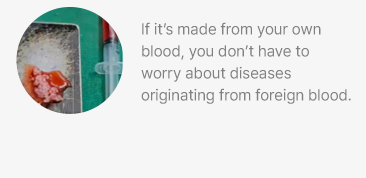
Autologous blood adhesive, made by extracting fibrin from the patient’s blood, secures the cartilage and aids in healing. Since it’s made from the patient’s own blood, there’s no risk of disease transmission.
LABOM PLASTIC SURGERY
Who Should Consider Cargel Nose Surgery
- 01. If you seek nose surgery with no scarring and quick recovery.
- 02. If you are uncomfortable with implants or concerned about their side effects.
- 03. If you need revision surgery due to complications from implants.
- 04. If you’ve reached the limits of repeat procedures like nose fillers.
Cargel Nose Surgical Method
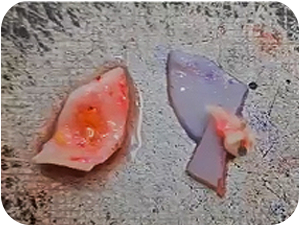
Autologous Cartilage (rib cartilage, ear cartilage, or septal cartilage) is harvested.
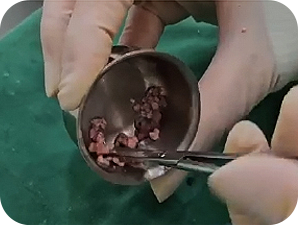
The harvested cartilage is finely ground using special surgical instruments.
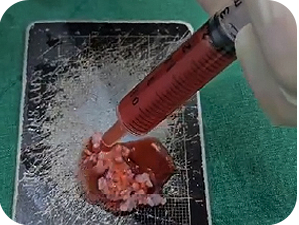
The sticky fibrin component from the patient's own blood is mixed with the cartilage.
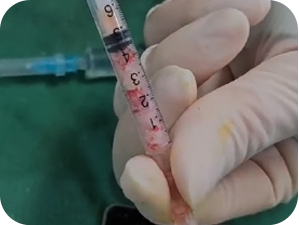
The completed cartilage graft is either directly inserted or easily injected into the nose bridge or tip.
Cargel Nose Surgery Information
Surgery Time
In 1 hour
Anesthesia Method
Sleep anesthesia
Hospitalization
Same-day discharge
Suture Removal
After 7 days
Recovery Period
1 week
LABOM NOSE 3
Correcting Function & Aesthetics Simultaneously with LaBom’s Expertise
Functional Nose Surgery
At LaBom Plastic Surgery, Functional Nose Surgery is performed after diagnosing issues using advanced 3D-CT
and FULL 3D nasal endoscopy. This surgery addresses internal nasal functions such as septal deviation, nasal valve stenosis, rhinitis, and sinusitis, while simultaneously performing aesthetic nose surgery.
Improving Rhinitis and Customized Nose Surgery
If there are issues with the septum or nasal valve structure, rhinitis symptoms often accompany them. By improving both functional issues and the external appearance of the nose, we can prevent nasal blockage and deformities.

Internal Nasal Issues Improvement
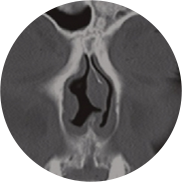
Correcting a deviated septum, Expanding a narrow nasal valve, Reducing hypertrophic turbinates to resolve nasal obstruction symptoms
External Nasal Issues Improvement
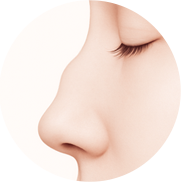
Addressing deformities caused by the septum, such as a crooked nose, dorsal hump, or upturned nose, with customized nose surgery for each type.
Deviated Septum
The septum is the vertical wall that divides the two nostrils in the center of the nose.
When the septum is bent or twisted, it is referred to as a deviated septum. Depending on the direction of the deviation, it can be categorized as either a C-shape or an S-shape. A deviated septum can lead to functional issues, such as nasal congestion, rhinitis, and sinusitis.
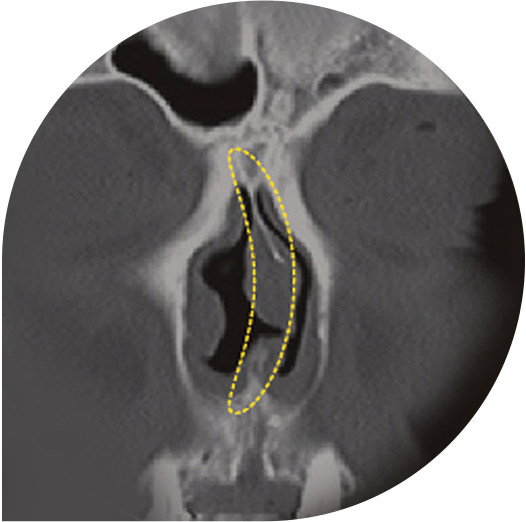
Deviated Septum
Surgery Expertise
The surgery is performed by removing the cartilage from the curved portion of the septum and using the remaining cartilage to properly correct the shape and height of the nasal tip.
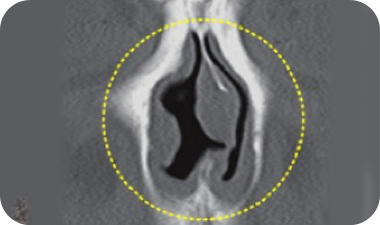
Before Surgery
Curved Septum
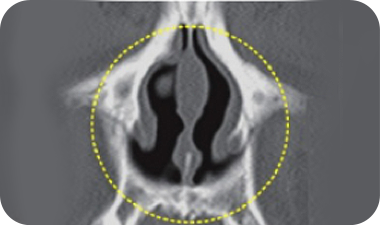
After Surgery
Corrected Septum
Nasal Valve Stenosis
The nasal valve is the narrowest part of the nasal cavity where air flows inside the nose.
Due to its naturally narrow structure, this area can become even narrower due to various causes, which is known as nasal valve stenosis. When the nasal valve narrows, it can lead to nasal congestion and sleep disorders.
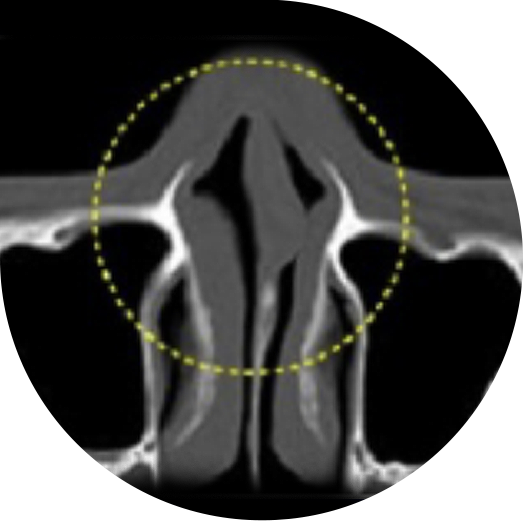
Nasal Valve Stenosis Surgery Expertise
To correct a narrowed nasal valve, a wedge graft technique is used. This involves implanting cartilage between the septum and the side wall to expand the width of the nasal valve.
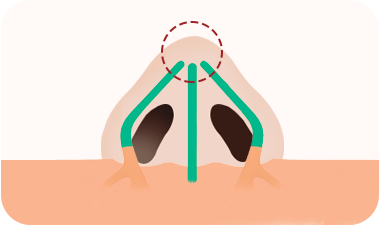
Before Surgery Narrow Nasal Valve
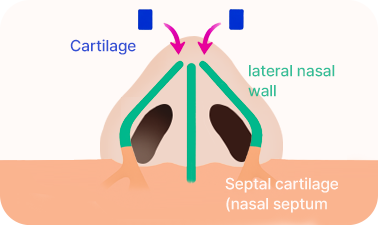
Cartilage Graft Between the Septum and Side Wall
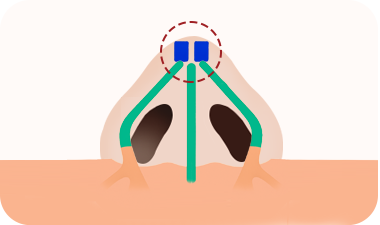
After Surgery Expanded Nasal Valve Correcting Stenosis
Hypertrophic Rhinitis
There are several types of rhinitis, including allergic rhinitis, vasomotor rhinitis, and hypertrophic rhinitis.
Among these, hypertrophic rhinitis is the type that responds most effectively to surgical treatment.
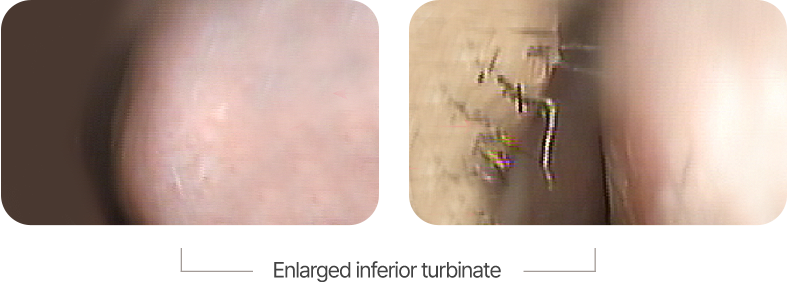
This condition occurs when the inferior turbinate—the soft tissue inside the nose—becomes abnormally enlarged, blocking the nasal airway.
It can lead to nasal congestion, sneezing, and itching.
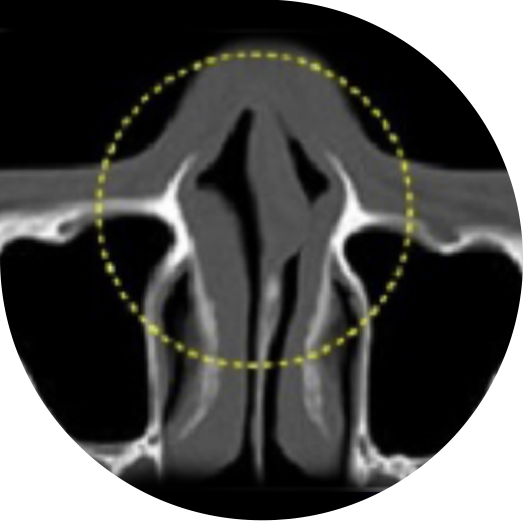
Hypertrophic Rhinitis
Surgery Expertise
Radiofrequency or electrocautery is used to reduce turbinate size and improve nasal airflow.
Functional Nose Surgery Information
Surgery Time
1-2 hours
Anesthesia Method
Sleep anesthesia
Hospitalization
Same-day discharge
Suture Removal
After 7 days
Recovery Period
1 week
LABOM NOSE 4
Accurate Cause Analysis, Customized 1:1
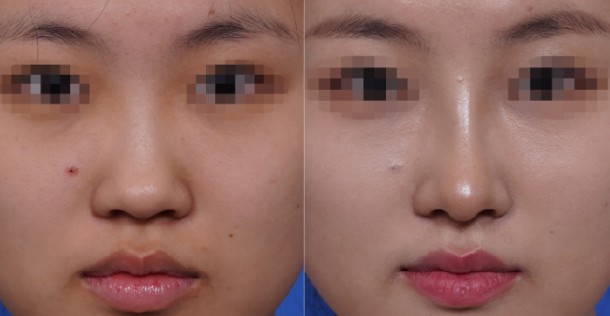
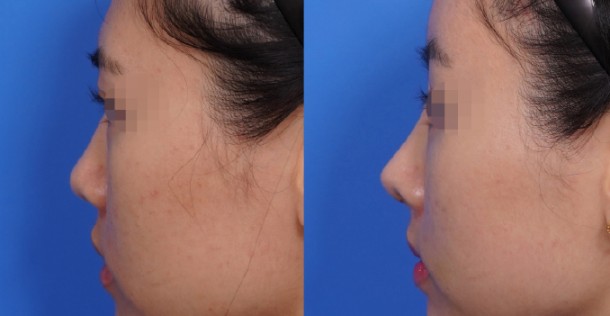
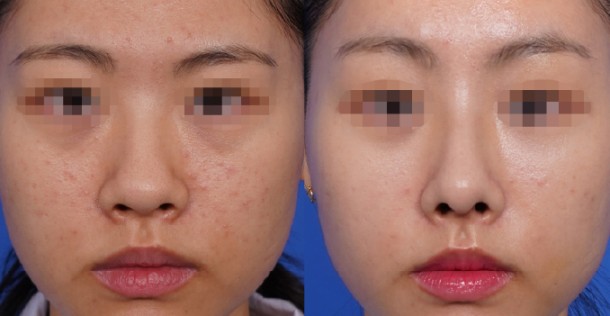
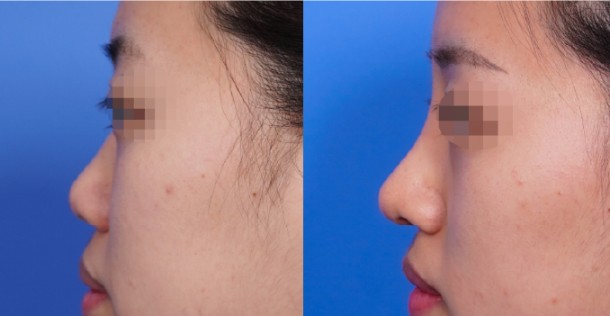
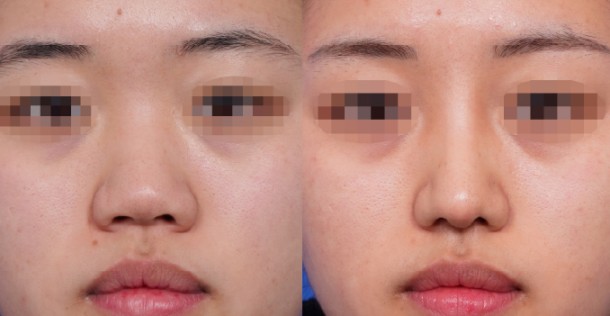
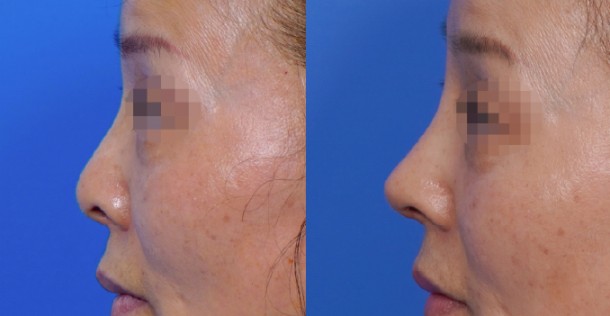
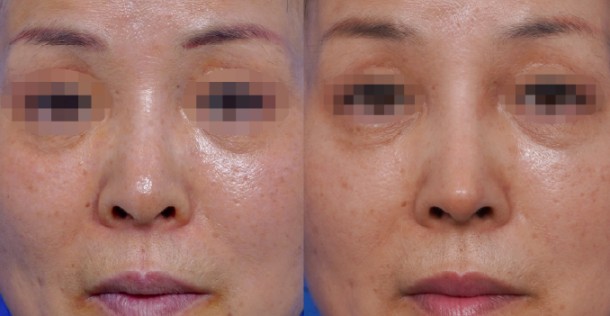
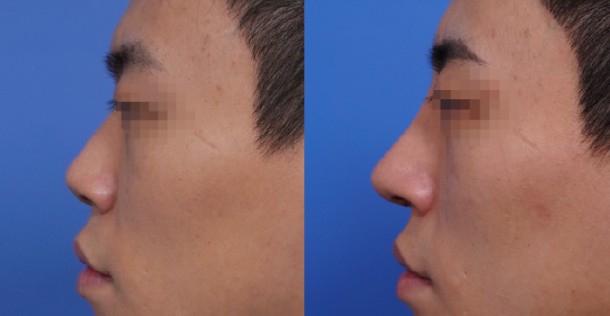
Revision Rhinoplasty
At LaBom Plastic Surgery, we resolve issues like shape dissatisfaction, implant visibility, nasal contraction,
or inflammation after primary nose surgery by analyzing the aesthetic and functional causes and performing the necessary corrective surgery..
LaBom Plastic Surgery Revision Rhinoplasty System
Before performing revision rhinoplasty, we analyze the cause of the failure and provide a customized, 1:1 surgical plan tailored to each individual.
The ideal time for revision rhinoplasty is between 6 months to 1 year after the initial surgery, allowing the tissue to stabilize. If inflammation occurs, we first address the underlying cause of the inflammation, confirm the recovery status, and then proceed with the revision surgery. Since the timing may vary based on the individual’s condition, cause, and type of revision, it is important to consult with a specialist to determine the best time for the surgery.

Revision Rhinoplasty Core Expertise
POINT 01
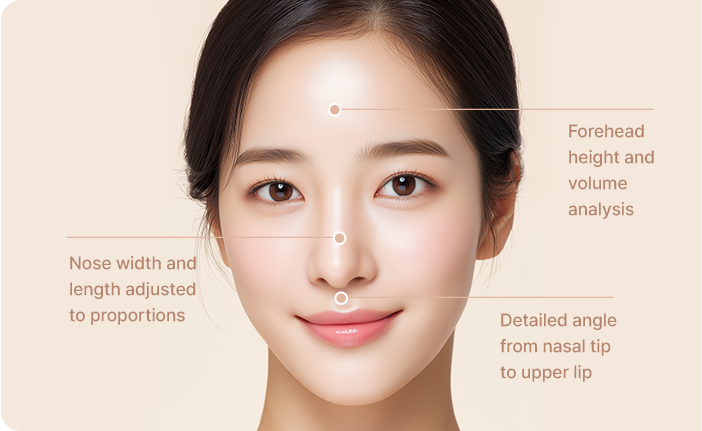
Personalized 1:1 Design Based on Proportions and Lines
- Ideal nasal bridge line based on facial proportions
- Balanced nose ratio and angle, without excess
- Defined nasal tip for a small, sculpted facial contour
POINT 02
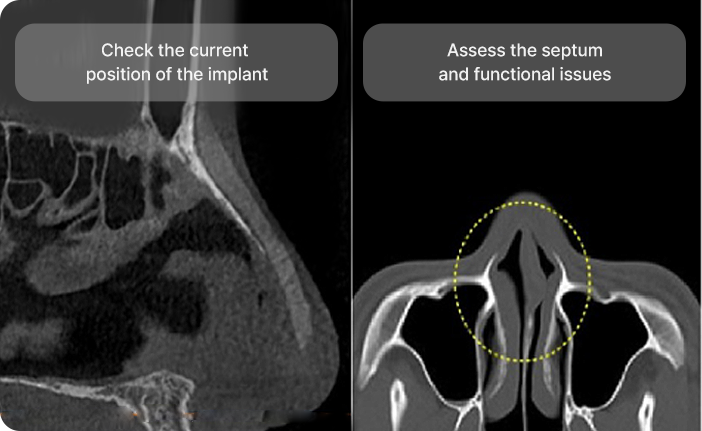
Precise Diagnosis and Analysis with 3D-CT
- Anatomical analysis of nasal bones, cartilage, and deviation
- Accurate diagnosis of implant position and previous surgery issues
- In-depth analysis of functional nasal structures like deviated septum and nasal valve
Revision Rhinoplasty case
CASE 01
When the Implant Shifts
If the implant has moved out of place or was inserted incorrectly from the beginning, it may be positioned off-center, excessively shifted, or raised between the eyebrows.
This can happen if the implant was not placed deep enough beneath the periosteum surrounding the nasal bones, or if the periosteum or skin was not properly dissected during insertion, causing the implant to shift or move when touched.
Surgical Expertise
We remove improperly designed or incorrectly placed implants and precisely reinsert a custom-made implant in the correct position to adjust the nasal bridge. If necessary, we make additional refinements to the length and other features during surgery.

CASE 02
When Inflammation Occurs
Inflammation can cause redness, swelling, pain, or pus formation in the nose.
Foreign-body reactions may lead to inflammatory secretions inside the nose.
If not treated early, it can result in a shorter or stiffer nose, and damage to the skin or cartilage may progress.
Surgical Expertise
We remove the contaminated implant and thoroughly disinfect the area. Any damaged or torn cartilage or mucosa is carefully restored to ensure complete healing.

CASE 03
When the Nasal Tip Shape Changes
This issue occurs when the implant protrudes excessively at the tip, the skin at the tip is thin, or the implant's thickness or width does not align with the contours of the nasal bones. Over time, the skin at the tip becomes thinner, and the tip may become pointy.
Surgical Expertise
We remove overly long implants and replace them with ones of appropriate length. To address the thinning nasal tip skin, we graft autologous cartilage or dermis.
We restore any damaged parts of the nasal tip cartilage and carefully refine the edges to ensure no protruding corners on the cartilage or graft.

CASE 04
When You Are Unsatisfied with the Shape After Rhinoplasty
This occurs when the nasal bridge is set too high, or the nose is disproportionate, either too high or low compared to the face. It may also result in an overly narrow and sharp nose on a wider face due to improper design.
Surgical Expertise
Through 1:1 consultations with specialists and precise diagnostic tools like 3D-CT, we reassess the optimal nasal shape and proportions for your face. We then adjust the implant size accordingly and perform meticulous corrections on the nasal bones, cartilage, and soft tissue.

Revision Rhinoplasty Information
Surgery Time
1-2 hours
Anesthesia Method
Sleep anesthesia
Hospitalization
Same-day discharge
Suture Removal
After 7 days
Recovery Period
1 week
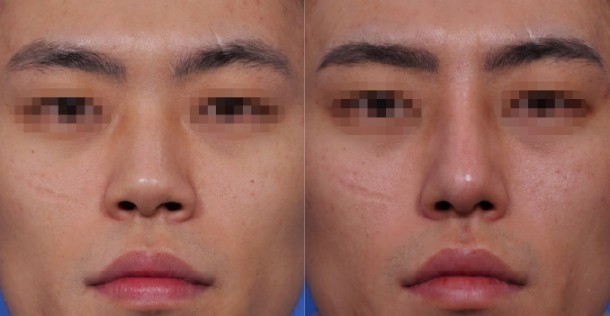
LABOM SPECIAL
True-to-Science Aesthetic Surgery
By staying true to the fundamentals of medicine and incorporating forward-thinking,
trendy designs, we provide optimized beauty tailored to each individual.
-
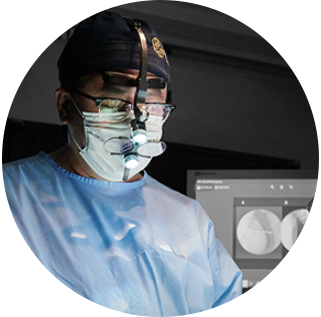
Ongoing Research for Beauty
We consistently pursue beauty
through scientific approaches,
never neglecting our
continuous research and efforts. -
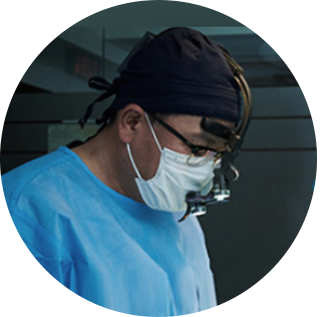
Expertise and Skill
With over 20 years of accumulated
experience and know-how,
LABOM offers differentiated
medical services unique to us. -
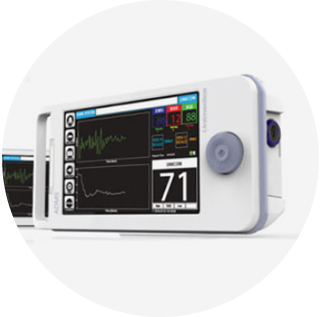
1:1 Customized Safe
Anesthesia SystemOur anesthesia system prioritizes
patient safety, ensuring peace of
mind even after the surgery. -
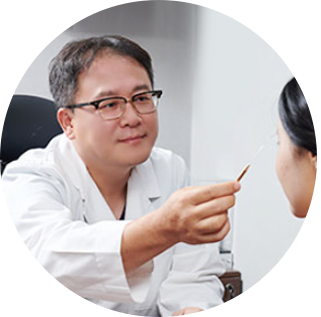
Post-Operative Care System
We reduce discomfort and help speed up
recovery with continuous post-surgery
care, minimizing complications and
enhancing patient comfort.
LABOM TUBE

Anti-Aging, Face Lifting, Facelift
A complete clean-up of the…

Forehead Surgery, Forehead surgical side effects
What are the side effects …

Plastic surgery side effects, plastic surgery side effects, surgical side effects
The truth of "Face while u…

Face aging, face wrinkles, low-speed aging
The real cause of face agi…

Back of the hand fat transplant, back of the hand wrinkles, back of the hand wrinkles
How to prevent wrinkles on…

I will show you Je Dae-ho's method for nose revision surgery
How to do nose revision su…
Plastic surgeons talk about middle-aged eyelid surgery
This is how you should do …

Sunken Eyelids
Why They Happen and How Up…
When It’s Needed and When You Should Never Do Inner or Outer Eye Corner Surgery
Eye Correction Surgery
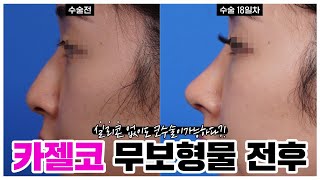
No-Implant Nose Surgery
This Type Guarantees Succe…
Anti-Aging, Face Lifting, Facelift
A complete clean-up of the…
Plastic surgery side effects, plastic surgery side effects, surgical side effects
The truth of "Face while u…
Face aging, face wrinkles, low-speed aging
The real cause of face agi…
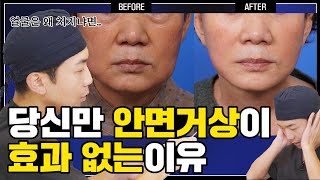
Facelift Didn’t Work for You?
The Real Reason Explained

Nasolabial Folds Explained
Types of Wrinkles and the …

Midface Lift
The Cases Where It Works 2…
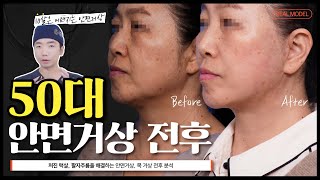
Facelift Before & After Review in Your 50s
The Real Reason Your Face …
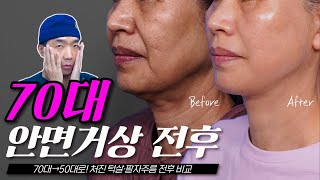
Facelift Before & After Review in Your 70s
Erasing the Marks of Time
Deep Plane vs. Dual Plane Facelift
What’s the Difference?
Forehead Surgery, Forehead surgical side effects
What are the side effects …
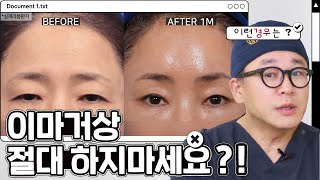
Thinking About a Forehead Lift?
Here’s When You Should Nev…

Forehead Lift Didn’t Work for You?
This Is the Real Reason!

The Real Reason Behind 1–2 Years vs. 10 Years
Forehead Lift Longevity
Plastic surgeons talk about middle-aged eyelid surgery
This is how you should do …
When It’s Needed and When You Should Never Do Inner or Outer Eye Corner Surgery
Eye Correction Surgery

Incision or Non-Incision Double Eyelid Surgery?
Here’s What the Specialist…

Essential Tips to Make Sure You Don’t Fail
Double Eyelid Surgery
I will show you Je Dae-ho's method for nose revision surgery
How to do nose revision su…
No-Implant Nose Surgery
This Type Guarantees Succe…
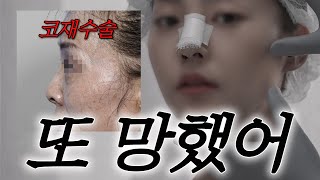
Before & After: Revision Nose Surgery in a 62-Year-Old
The Challenge of Nostril a…
Back of the hand fat transplant, back of the hand wrinkles, back of the hand wrinkles
How to prevent wrinkles on…
Sunken Eyelids
Why They Happen and How Up…
Office hour
- Mon/Tue/Wed/Fri
- AM 10:00 ~ PM 07:00
- Saturday
- AM 10:00 ~ PM 04:00
- Lunch Break
- PM 01:00 ~ PM 02:00
* Closed on Thursday, Sunday, and public holidays.
Contact
+82.1661.7120
Directions
Subway Line 3 - Apgujeong Station, Exit 3
Apgujeong Building
1st and 2nd Floors, 842 Nonhyeon-ro,
Gangnam-gu, Seoul, South Korea